

October 29, 2024
Two Laurel Ridge Community College programs – Adult Education and Workforce Solutions – have long been serving and enhancing our communities. And, recently, they have joined forces to improve outcomes for those serving in our detention centers.
Adult Education’s Integrated Education and Training (IET) initiative, paired with Workforce Solutions programming, has resulted in detainees earning workforce credentials while incarcerated. Outside of detention centers, Adult Education serves hundreds of people each year through its GED and ESL classes.
IET is a model designed to provide support for adult learners seeking to gain the skills they need to start on a career pathway that leads to living-wage jobs. It combines Adult Education support and post-secondary training – an instructor from Adult Education works together with the subject-matter expert to ensure students have the academic skills to earn the credential. The program’s career coach also works with the students on their resumes, interview skills and how to explain what they are capable of because of the credential they’ve earned.
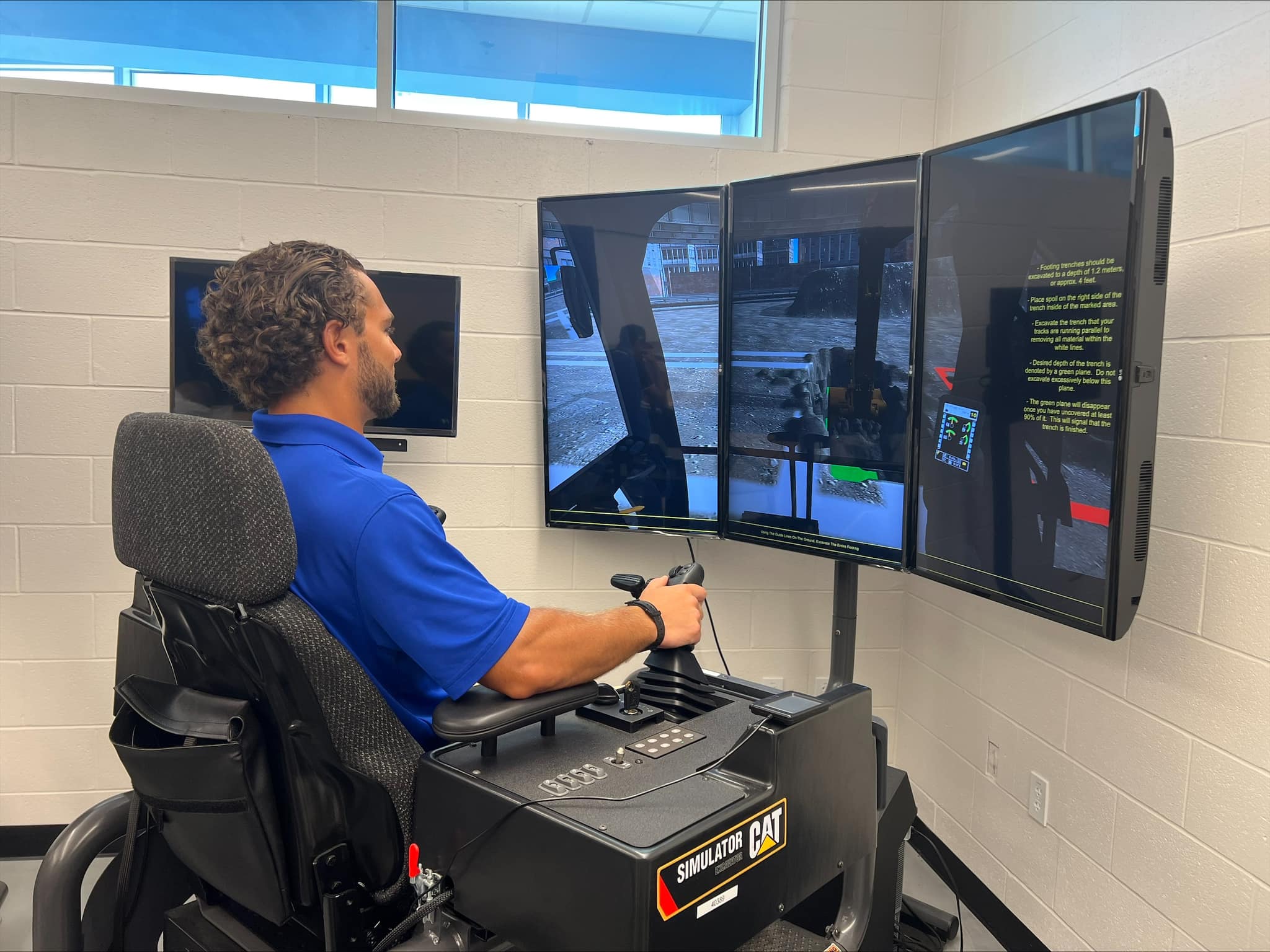
Inmates at the Northwestern Regional Adult Detention Center in Winchester have recently completed new programs in horticulture and heavy equipment operator (HEO). The horticulture program was a specialized program being offered by the jail, while the HEO program was offered through Workforce Solutions.
“There happened to be a master gardener teaching special education at the jail,” said Adult Education Director Sharon Hetland. “She and the Adult Education instructor worked together on planning lessons, and what vocab and math would be involved to help them earn the certification through NOCTI (National Occupational Competency Testing Institute).”
“We have also worked with Workforce Solutions on trades and HEO. We work together to make sure the students have the academic foundation to be successful in class and earn that certification. A lot of time, it’s improving their vocab and math skills, but it can be some softer skills, too, such as how to transition from a profession where they worked outside to working in an office.”
The latter is where the National Retail Customer Service Credential came in handy. That credential also covers employability skills, said Hetland. This industry-recognized credential has been offered to both native and non-native speakers and is a planned additional IET initiative at NRADC.
“Integrated Education and Training is a partnership that allows the folks in the jail to get that extra Adult Education support when they’re not used to being in a class or taking tests,” said Hetland.
Workforce Solutions has over the years engaged with various adult detention centers, said trades program manager Donna Comer. The HEO program has had great success. Workforce Solutions was approached in December 2020 by officials with the Prince William County Adult Detention Center regarding 12 students interested in the HEO program.
Two cohorts at the Northwest Regional Adult Detention Center have also completed the HEO class, with the most recent completing in August using the program’s mobile unit.
“It was our first mobile heavy equipment class,” said Comer. “We brought the program to the detention center in Winchester. Heavy Equipment Operator is an attractive program for the detention centers because construction is a very forgiving field, and the re-entry is a little easier for those students.
“Also, our HEO program has a guarantee to interview at the end of class. We have a strong partnership with the Heavy Construction Contractors Association and those employers agree to interview our students. They have no hesitation in interviewing the students graduating from the program out of the local detention centers.”
All of the students participating in the classes have already been approved for work release.
“One of the students was recently hired while still in the facility,” said Hetland. “He’s earning wonderful wages while he is in there.”
On average, housing each inmate costs about $40,000 a year, said Comer. Preventing a return to detention saves taxpayer dollars.
“So, programs like these are a cost savings,” she said. “The students gain marketable skills. They gain confidence. They experience some personal growth and development, and they get prepared for re-entry. The goal is they will become gainfully employed.”
Hetland added, “The recidivism rate is much, much lower in jails that have programming like this.”
Founded in 1970, Laurel Ridge Community College is a multi-campus public institution of higher education. With three locations — Middletown, Warrenton, and Luray-Page County — the College serves eight localities in the Shenandoah Valley and northern Piedmont regions. The localities are the counties of Clarke, Fauquier, Frederick, Page, Rappahannock, Shenandoah and Warren and the city of Winchester. Laurel Ridge offers more than 75 associate degree and certificate programs in a wide variety of disciplines. Laurel Ridge also serves the business community by offering workforce preparation programs for employees and employers. Laurel Ridge serves more than 9,000 unduplicated credit students and more than 11,000 individuals in professional development and business and industry courses annually.
 Laurel Ridge Community College is accredited by the Southern Association of Colleges and Schools Commission on Colleges (SACSCOC) to award associate degrees. Laurel Ridge Community College also may offer credentials such as certificates and diplomas at approved degree levels. Questions about the accreditation of Laurel Ridge Community College may be directed in writing to the Southern Association of Colleges and Schools Commission on Colleges at 1866 Southern Lane, Decatur, GA 30033-4097, by calling (404) 679-4500, or by using information available on SACSCOC’s website (www.sacscoc.org).
Laurel Ridge Community College is an equal opportunity institution providing educational and employment opportunities, programs, services, and activities. Laurel Ridge shall promote and maintain equal employment and educational opportunities without regard to race, color, religion, disability, sex, sexual orientation, gender identity, ethnicity, marital status, pregnancy, childbirth or related medical conditions including lactation, age (except when age is a bona fide occupational qualification), status as a veteran, national origin, or other non-merit factors. Laurel Ridge also prohibits sexual misconduct including sexual violence or harassment. Inquiries may be directed to the Associate Vice President, Human Resources, [email protected], 173 Skirmisher Lane, Middletown, VA 22645, 540-868-7226.
Laurel Ridge Community College was known as Lord Fairfax Community College until June 2022. For consistency purposes, the college will be referenced as Laurel Ridge going forward.