

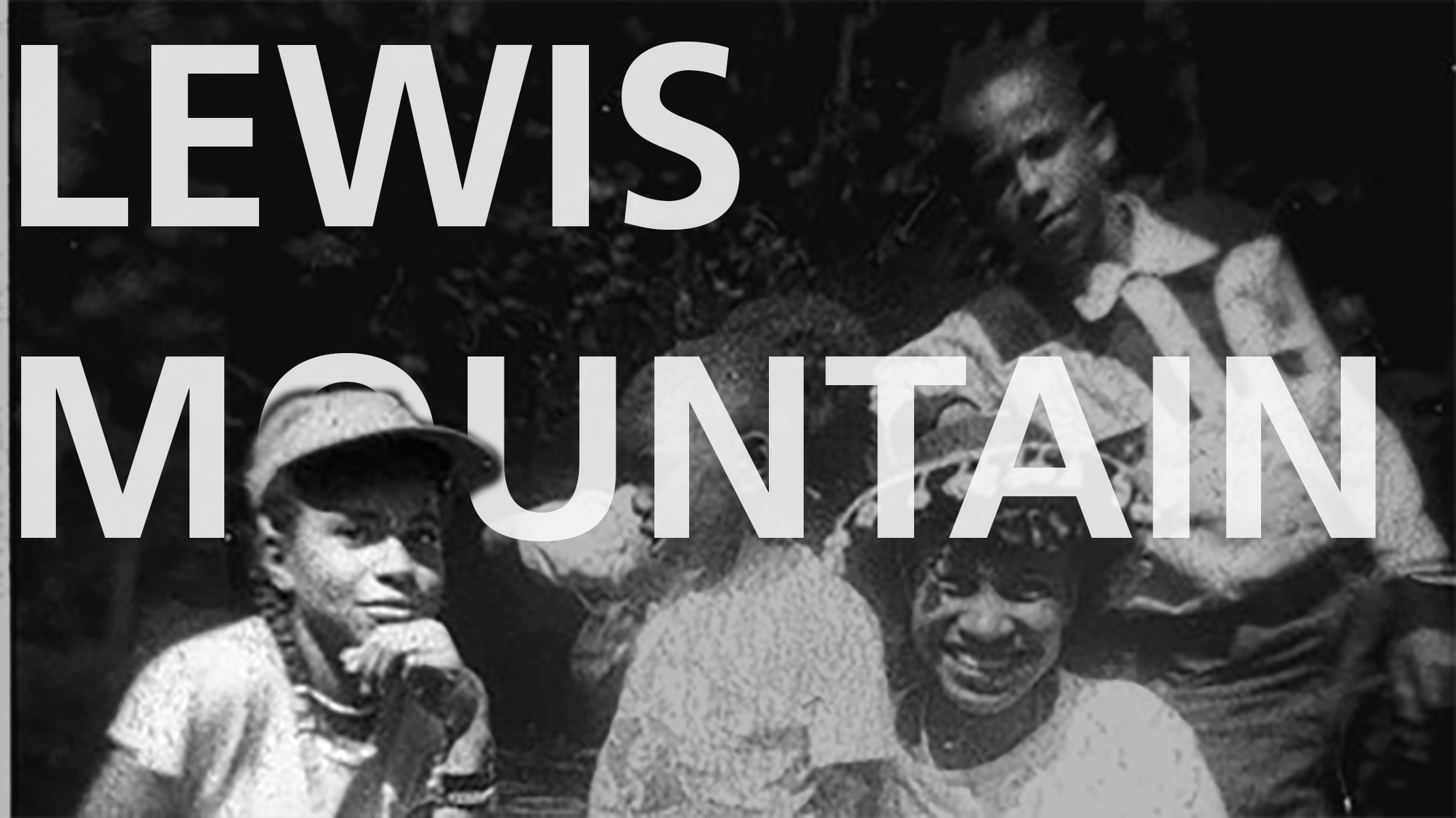
Join us as we explore Shenandoah National Park’s newest interactive web-based curriculum, “Life at Lewis Mountain: Shenandoah in the Jim Crow Era,” during a special program beginning at 6 p.m., Thursday, June 6, in Jenkins Hall at Laurel Ridge’s Luray-Page County Center.
SNP interpretive specialist Claire Comer and visual information specialist Allysah Fox will do a presentation on the development of the curriculum that covers the history of Lewis Mountain Campground – a section of the park near mile marker 60 on Skyline Drive that was established for Black parkgoers and included a campground, picnic area, lodge and cabins – and the struggle between those wanting to integrate the park, and those who wished to keep it segregated.
The interactive program, which can be viewed at https://www.nps.gov/features/shen/lewisMT/index.htm, includes five short videos with follow-up activities suitable for upper-middle school and high school students, Comer said. The videos include oral histories, letters to and from park leaders, newspaper articles and photographs from the Jim Crow era.
Decades of research and collaboration went into creating the program, according to a news release from SNP. A Lewis Mountain staff member from the 1950s, Audrey Tutt-Smith, contributed greatly to it, as did other members of the Lewis Mountain staff and the Black community.
In addition to the interactive online curriculum, the visitors center at Big Meadows along Skyline Drive features interpretive information, including oral histories, about the segregation and integration of the park, Comer said.
“That’s the best place to go in the park to get that story,” she said. “They can also explore that exhibit online without having to actually go. At Lewis Mountain, there’s a panel that explains the history of it. It’s still a working campground and lodge. There are multiple ways to learn the story, both in the park and virtually.
“We want to share all of our stories. We think that the existence of Lewis Mountain, the story of segregation and desegregation are important for people to hear. There were a lot of local folks who worked there and made it a really fun and exciting destination for African-Americans during that period. Also, just the struggle to end segregation. It’s a very interesting and very complex story.”
Refreshments will be provided at the June 6 presentation. For more information, contact Comer at 540-999-3500, ext. 3183.
 Laurel Ridge Community College is accredited by the Southern Association of Colleges and Schools Commission on Colleges (SACSCOC) to award associate degrees. Laurel Ridge Community College also may offer credentials such as certificates and diplomas at approved degree levels. Questions about the accreditation of Laurel Ridge Community College may be directed in writing to the Southern Association of Colleges and Schools Commission on Colleges at 1866 Southern Lane, Decatur, GA 30033-4097, by calling (404) 679-4500, or by using information available on SACSCOC’s website (